
Why Split Is One of the Most Unique Places in the World
From Diocletian's Palace to the Adriatic coast, discover what makes Split truly one of a kind, and why Hotel Venturo is the perfect base.

Project co-financed by the European Union – NextGenerationEU
Learn more about the project on the EU project page.
When summer fades and the Adriatic sea turns a deeper, calmer blue, Split transforms. The marble streets, warmed by months of sun, begin to cool under the gentle light of autumn. The crowds thin, the air grows soft, and the city’s rhythm changes. This is when Split exhales returning to its authentic self, when local life, culture, and the sea find their perfect harmony. For travelers seeking substance over spectacle, autumn is the season when Split quietly reveals its most beautiful side.
It begins, as all journeys through Split do, at Diocletian’s Palace. This ancient Roman masterpiece, built as a retirement home for Emperor Diocletian in the 4th century, remains the beating heart of the city. But in autumn, something shifts. The courtyards and alleyways that brim with summer energy now feel calm and reflective. The echo of footsteps on stone replaces the noise of crowds, and every archway and passage feels like an open invitation to slow down and look closer. The Peristyle glows in the golden afternoon light, and the view from the bell tower of St. Domnius Cathedral stretches over a sea of terracotta rooftops and endless blue.
For those who prefer nature to stone, Marjan Hill is where Split breathes. The pine forests that crown this green peninsula are laced with walking trails leading to small chapels and lookouts with panoramic views of the city and nearby islands. In autumn, the air is crisp, the colors rich, and the sound of the sea follows you through the trees. Locals come here to run, cycle, or simply think, and visitors who follow their lead quickly understand why.
As the city settles into its off-season rhythm, its cultural life begins to bloom. The Croatian National Theatre reopens its doors with opera, ballet, and drama performed in one of the most elegant venues on the Adriatic. The Split Film Festival brings international creativity to local screens, while the Meštrović Gallery continues to enchant visitors with the strength and beauty of Croatia’s most celebrated sculptor.
But no season in Split is complete without its food, and autumn brings an especially delicious transformation. At the bustling Green Market, or Pazar, farmers’ stalls overflow with figs, pomegranates, mushrooms, and bottles of golden olive oil. Locals chat, bargain, and laugh over baskets of produce, and visitors quickly realize that shopping here is as much a social ritual as a practical errand.
Exploring Split in autumn is best done without a map. Let yourself wander through the narrow streets of Veli Varoš, where stone staircases twist upward and cats stretch lazily in doorways. Stop for coffee on the Riva promenade and watch the world go by—the fishermen at Matejuška mending their nets, the children chasing pigeons, the sea shimmering under the afternoon sun. There is no rush here, only rhythm.
Beyond the city, autumn invites discovery. A short drive leads to Klis Fortress, a powerful reminder of Split’s long and proud history. Standing high above the city, the fortress offers sweeping views of the Adriatic and a quiet sense of timelessness. For a touch of pure charm, visit Trogir—a UNESCO World Heritage town just thirty minutes away—where cobblestone streets, hidden courtyards, and Renaissance architecture create the perfect day trip.
Autumn in Split is not about ticking off sights. It’s about connection: to the city’s rhythm, to its people, and to yourself. It’s the season when you can explore without haste, eat with intention, and feel the centuries beneath your feet.
Because in autumn, Split doesn’t perform. It simply is. And that’s when it’s most unforgettable.
From Diocletian's Palace to the Adriatic coast, discover what makes Split truly one of a kind, and why Hotel Venturo is the perfect base.
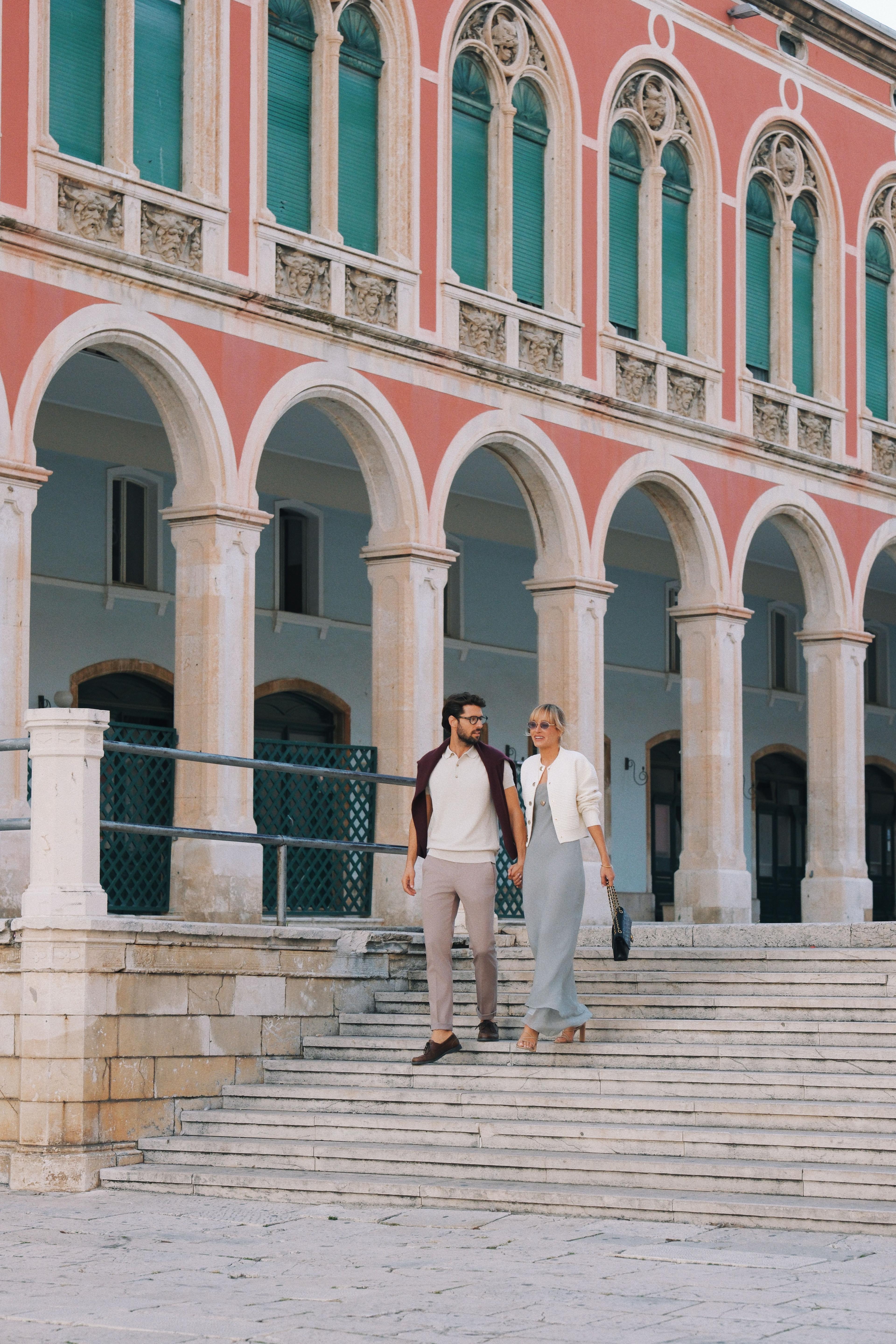
Cobblestone streets, Roman walls, and a slower pace of life. Discover the soul of Split in winter with Hotel Venturo as your boutique retreat.